
MEDIA KIT
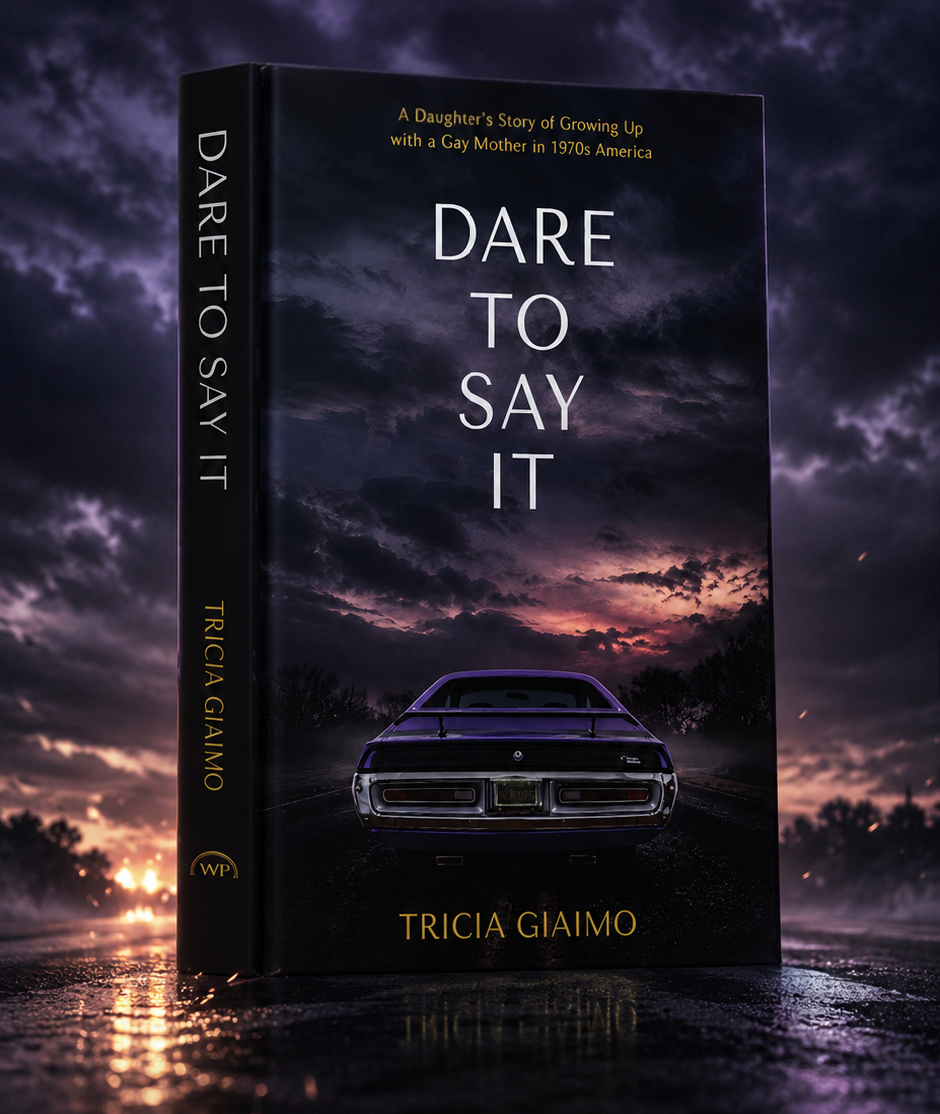
Dare to Say It — A Daughter's Story of Growing Up with a Gay Mother in 1970s America
By Tricia Giaimo
Press and media resources — book jacket art, author photo, synopsis, and interview questions, ready to use.
Book Jacket Art & Author Photo

Synopsis
Dare to Say It is Tricia Giaimo's memoir of growing up the daughter of a gay mother in 1970s America — a story of parental kidnapping, secrecy, and abandonment, and the method she built afterward for stripping the past of its power instead of carrying it for life.
What's it like to grow up as the daughter of a gay mother — and to be told the truth about your own family is a secret you can never share with anyone? And what did it cost to be gay in 1976 — when it wasn't celebrated or even tolerated, but condemned, and dangerous enough that a mother could lose her children for it?
For Tricia Giaimo, neither question is hypothetical. When she was five, her mother and her mother's girlfriend had fled across the country to be together in secret. Then both fathers came for the children — snatching Tricia and the other woman's son out of school while the staff chased them on foot, down the street, after the car. Because the mothers were gay, the police were no help, so the two women tracked the kids down and stole them back themselves. Tricia was eight before she was told her mother was gay and that it had to stay hidden — and that was the moment the kidnapping finally made sense.
Dare to Say It is the story of what came before and after — a brilliant, unstable mother, a chain of relationships that kept uprooting her, and an abandonment at twelve that should have decided who she became, and didn't.
This isn't a misery memoir. It's about radical accountability, and about breaking a cycle of abandonment that ran in her family for generations and refusing to hand it down. Set against the real legal history of gay custody battles and interstate parental kidnapping in the 1970s — documented in the book's appendices — it's both a survival story and a firsthand record of a family the era refused to make room for.
Some of it will make you angry. Some of it will break your heart. But the book isn't really about what happened to her — it's about what she built from it: a hard-won method for stripping the past of its power instead of carrying it for life.
This is Book One.
Book Details
Title: Dare to Say It
Subtitle: A Daughter's Story of Growing Up with a Gay Mother in 1970s America
Author: Tricia Giaimo
Genre: Memoir
Formats: eBook ($7.99) · Paperback ($16.99) · Hardcover ($27.99) · Kindle
eBook: Buy direct at masterthecodes.com
Print / Kindle: Available on Amazon
Book page: masterthecodes.com/dare-to-say-it
About the Author
Tricia Giaimo is the author of Dare to Say It: A Daughter's Story of Growing Up with a Gay Mother in 1970s America. Her debut memoir tells the story of a child caught inside adult secrets, a 1970s custody conflict, parental kidnapping, abandonment, betrayal, and the kind of resilience no child should ever have to build. Giaimo writes with blunt honesty, dark humor, and a refusal to turn trauma into soft inspiration.
She is also the founder of The Giaimo Code, a human intelligence framework built on seven codes that stack and run concurrently. The assessment and the Sovereign Thinking training are live now at masterthecodes.com. Outside of writing, Giaimo paints custom skateboards and is a competitive pool player, with several division championships to her name. Tricia lives in California.
Interview Questions
Ready to copy. Use as-is or adapt for your format.
- Dare to Say It opens with your family living a secret you couldn't even speak inside your own home. What made you decide, decades later, to say it out loud?
- You were eight when you learned the truth about your mother — and that it had to stay hidden. What do you remember about that day?
- The book is set against real legal history — interstate parental kidnapping, gay custody battles in the 1970s. How much of that history did you have to dig up yourself?
- You call this a story about radical accountability, not a misery memoir. What's the difference, in your view?
- Abandonment runs through generations of your family. What did it actually take to break that cycle instead of just naming it?
- You write with blunt honesty and dark humor about material most people soften. Was that a deliberate choice, or just how you talk?
- What was the hardest scene in the book to get right on the page?
- This is Book One. What's still ahead?
- You're also the founder of The Giaimo Code. How much of that framework grew directly out of what's in this book?
- What do you want a reader who grew up keeping a similar secret to take from this?
Press Contact
For interviews, features, and review copies: